Paperback & Kindle
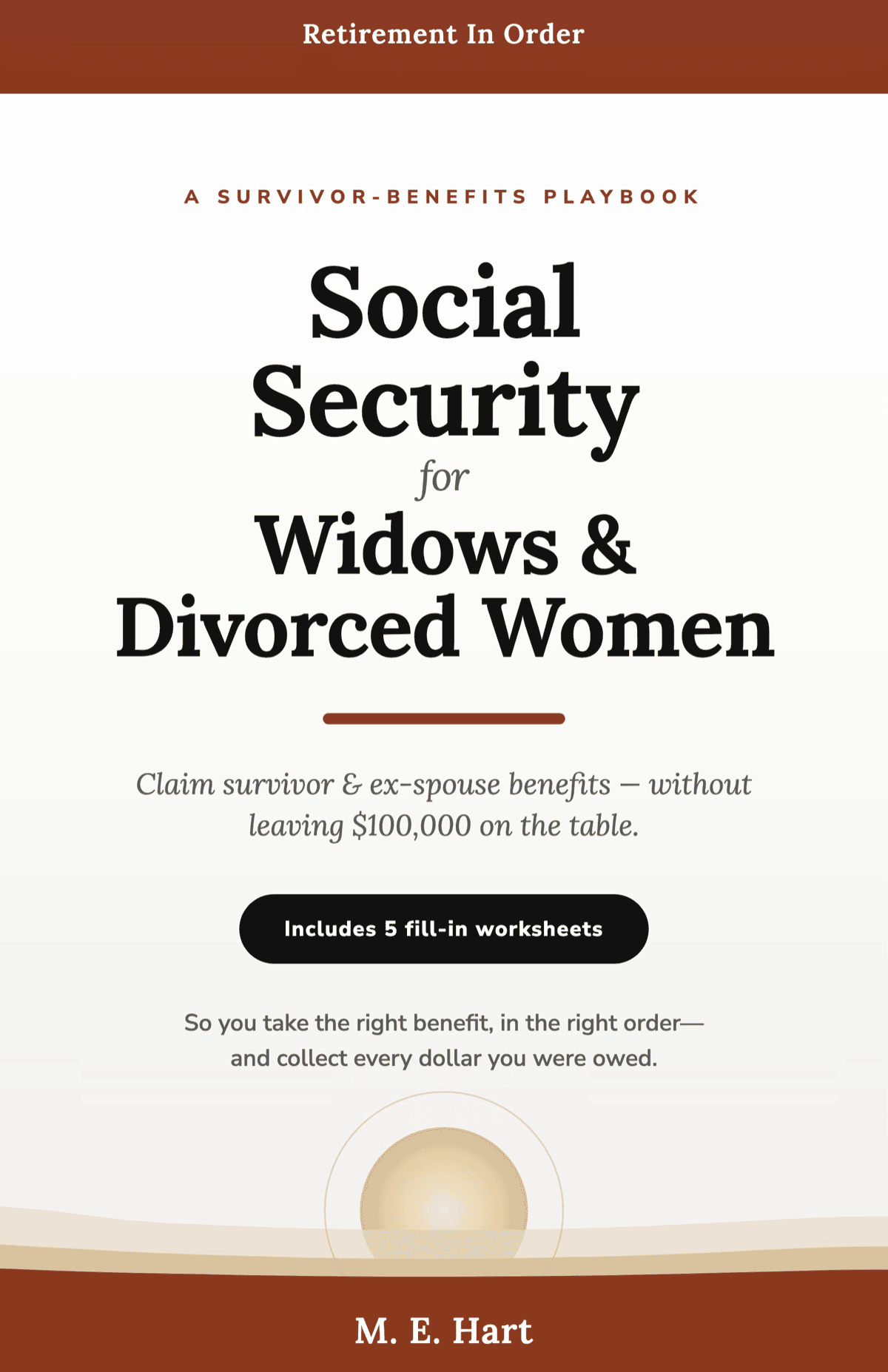
How to claim survivor and ex-spouse benefits without leaving $100,000 on the table.
No one hands you a manual the week your husband dies — or the day the divorce is final. This is that manual. In April 2026, Social Security's own inspector general found that 5,367 widows could have received $113.8 million more — roughly $21,000 each — simply by claiming their benefits in a smarter order, and no one at the office is required to map that order for you. This plain-English playbook is written for the two women the system keeps failing: the widow who doesn't know she can take one check now and switch to a bigger one later, and the divorced woman who never claims on her ex's record because she believes it would cut his check or that he'd be told (it wouldn't, and he isn't). It covers the survivor "switch" strategy worth six figures, exactly what a widow is entitled to and when, the divorced-spouse rules in plain English, how to verify SSA's number before you accept it, what gets taxed, and a one-page decision framework — plus five fill-in worksheets.
The mistake no one warned you about
In April 2026, Social Security's own inspector general found that 5,367 widows could have received $113.8 million more — roughly $21,000 each — simply by claiming their benefits in a smarter order. Nobody at the office is required to map that order for you. This book does, in plain English.
It's written for two women the system keeps failing: the widow who doesn't know she can take one check now and switch to a bigger one later, and the divorced woman who never claims on her ex's record because she believes it would cut his check or that he'd be told. It wouldn't, and he isn't — and this book shows you exactly what you're entitled to, at what ages, and in what order.
The part most guides get wrong
Your survivor benefit and your own benefit are separate checks, and you can take one now and switch to the other later — letting the bigger one grow untouched until it peaks. Because survivor benefits are exempt from the deemed-filing rule, this switch is legal for every birth year, which is exactly the distinction generalist books and AI muddle. The book walks both scenarios with real numbers, plus the divorced-spouse rules — the 10-year line, the 2-year rule, and the myth that stops women cold.
Five fill-in worksheets insideWhat you'll work through
Good to know
A woman deciding alone — recently widowed or divorced — who has to arrange her own Social Security and doesn't want to leave money on the table. It's written for your situation specifically, in plain English, whether the loss is recent or years behind you.
The survivor "switch" strategy (take one check now, switch to the bigger one later), exactly what a widow is entitled to and at what ages, the divorced-spouse rules in plain English, what you can claim when an ex has died, how to verify SSA's own figure, and what gets taxed. It includes five fill-in worksheets: Which Door Am I?, Benefit Comparison, What to Ask Social Security, a Document Checklist, and My Key Dates.
No to both. Per Social Security's own rules, claiming on an ex-spouse's record does not reduce his benefit, does not affect his current spouse's benefit, and he is not notified. The book quotes SSA directly and explains the 10-year-marriage, 2-year-divorce, and age-62 rules so you know exactly where you stand.
Yes — every dollar figure, age threshold, and rule was verified against SSA, IRS, and the SSA inspector general's primary sources in 2026, including the deemed-filing birth-year cutoff and the Social Security Fairness Act. Because these rules change, treat it as an educational guide and confirm current figures at SSA.gov before you file.
No. It's an educational guide written to help you understand your options and ask better questions — not financial, tax, or legal advice. Confirm your situation with SSA (1-800-772-1213) and consider a fee-only fiduciary. It's published under the pen name M. E. Hart as part of the Retirement In Order series.
Free Tool
Use our free "Which Benefit, When?" flowchart to see, in a few taps, which Social Security benefit you should claim first — widow, divorced-spouse, or your own — based on SSA's own rules. Then this book walks you through the strategy in depth.
Open the free flowchart →You may also be interested in
Free quick-start checklists that take the overwhelm out of getting your next chapter in order — where to begin, what to gather, and what to write down first. Tell us where to send it.
We just sent a confirmation email. Click the link inside and your free download lands right after. (If you don't see it, check spam or promotions.)
By M. E. Hart
Plain-English books for your next chapter — written to stay useful year after year.
Find it on Amazon →